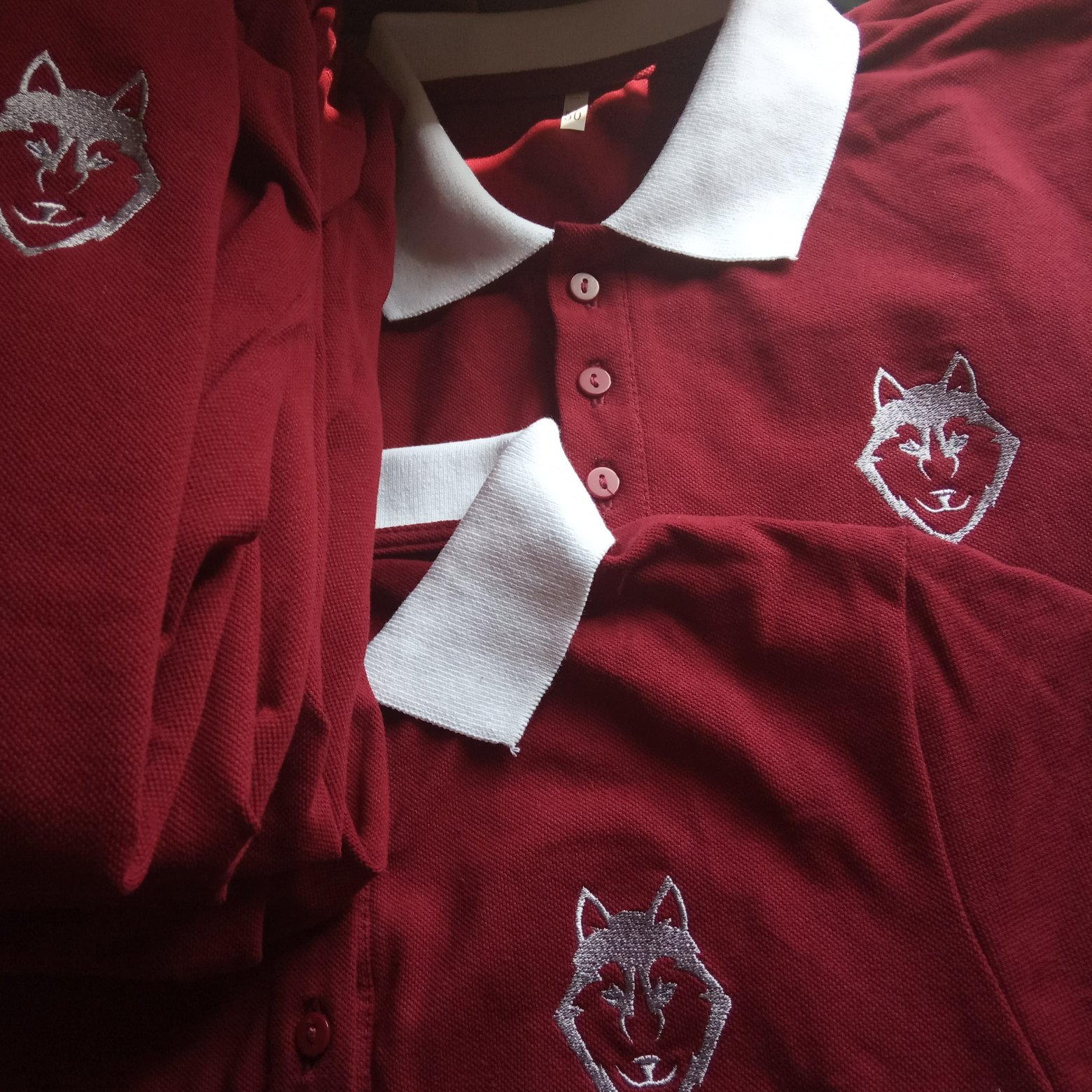
Choosing a school uniform supplier is a decision that affects your school for years and touches every family in your community. Most schools we talk to have been burned at least once — slow delivery before September, sizing chaos, suppliers who go silent mid-year. This guide gives you six criteria to evaluate properly, and the questions to ask before you sign anything.
1. Compliance documentation — non-negotiable
Any supplier serving European schools must provide OEKO-TEX Standard 100 certificates (Class II minimum for garments worn next to skin) and REACH compliance declarations. These aren’t nice-to-haves. They’re the legal baseline for products children wear daily.
Ask: “Can you send me the OEKO-TEX certificates and REACH declarations for every garment and embroidery thread you supply?” A serious supplier sends these within 24 hours. If they hesitate or send you a generic brochure instead, walk away.
2. Production location — Europe matters more than ever
EU production gives you traceability, labour-standard transparency, and shorter logistics chains. It also matters for school communities increasingly aware of supply chain ethics.
Ask: “Where are your garments actually produced, and which production partner makes which item?” Vague answers (“we have producers in Europe”) are different from specific answers (“Foundation polos are produced by [named partner] in Spain, hoodies by [named partner] in Italy”). Specific is better.
3. Modern parent ordering — the difference between chaos and calm
Old-school suppliers run on annual order forms, printed brochures, and supplier-side spreadsheets. Modern suppliers offer parent-facing ordering portals with anonymised pupil IDs, sizing guides, admin dashboards, and paper-form fallback for non-digital families.
Ask: “How do parents place orders, and what does the admin side look like?” If the answer involves emailed PDFs or spreadsheets, expect operational pain.
4. Sustainability beyond OEKO-TEX
OEKO-TEX is the floor, not the ceiling. Look for suppliers with EPR registration in major EU markets (Germany LUCID, France Citeo), recycled material options, and clear end-of-life paths for garments. Schools serving sustainability-conscious communities should ask explicitly.
Ask: “Where are you registered for EPR, and what’s your approach to recycled materials and garment lifecycle?“
5. Budget tiers — flexibility matters
Schools serving diverse families need supplier options that work at different budget levels. A supplier that only sells one tier of premium garments excludes parts of your community. Look for tiered programmes — patches-only for accessibility, mid-tier for most families, premium for institutions wanting heavyweight bespoke production.
Ask: “What programme tiers do you offer, and how do they price differently?“
6. Partnership culture, not transaction culture
The best supplier relationship is one where the supplier is available for school board questions, runs samples before bulk production, and is honest when a timeline is unrealistic. The worst suppliers treat schools as transactions.
Ask: “Tell me about a time you told a school no — or said a timeline wasn’t feasible.” Suppliers who can answer this honestly are the ones worth keeping.
A practical sequence
Start with the documentation request (criterion 1). Suppliers who fail this filter eliminate themselves immediately. From the survivors, evaluate criteria 2-6 through a short call and a sample order. The whole process takes 3-4 weeks if you run it efficiently — and it determines the quality of your school identity programme for the next several years.