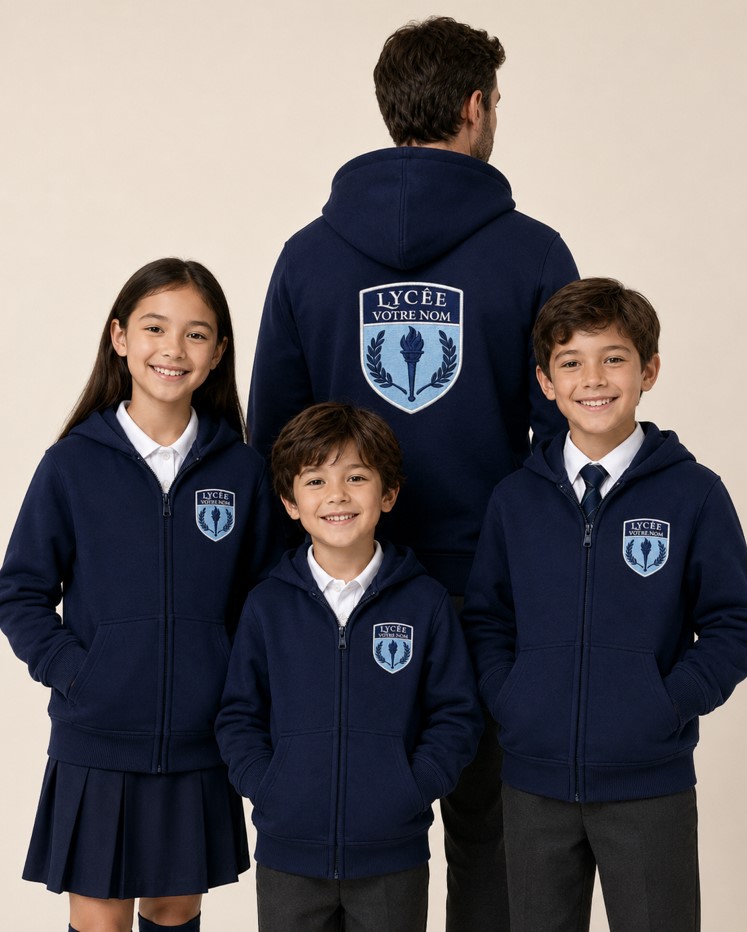
Something quiet is happening to school uniform across Europe, and the numbers tell the story clearly. In 2026, 87% of UK primary schools permit polo shirts year-round rather than as a summer-only option. A 2025 survey by Teacher Tapp found that 75% of UK primary school teachers prefer a “practical” uniform of jogging bottoms and polo shirts over the traditional shirt-tie-blazer combination. In February 2026, a secondary school in Derby formally dropped blazers and ties in favour of polo shirts and all-weather jackets, citing comfort, sensory considerations, and family budget pressure as the reasons.
This isn’t a fashion trend. It’s a structural shift in how schools think about identity wear.
What’s driving the change
Three forces are pushing schools away from formal uniform simultaneously. First, parent budgets — a full traditional uniform (blazer, shirt, tie, trousers, PE kit) costs €150-250 per child per year in the UK and significantly more in international schools. Polo and hoodie programmes typically run at a third of that cost. Second, comfort and inclusion — children in sensory-sensitive groups, neurodivergent children, and children from families who can’t afford multiple sets of formal wear are all better served by practical garments. Third, teacher preference — the 75% figure isn’t aspirational. Teachers see daily what works and what doesn’t in classrooms designed for active learning.
What European schools want isn’t no uniform. It’s a different kind of uniform.
What the alternative actually looks like
The modern programme has settled into a recognisable pattern across European schools that have moved on from blazers:
- Embroidered polo shirt — chest crest, year-round, multiple colours by year group or house
- Embroidered sweatshirt or fleece — autumn and winter layer, same crest
- Embroidered hoodie — for older year groups, often as the secondary or PE option
- Optional jogger or jogging bottoms — practical lower half, navy or grey, no crest needed
The crest does the identifying work. The garments do the practical work. Together they create exactly what traditional uniform created — visual coherence, school belonging, parity across budgets — without the rigidity that was making the old approach untenable.
What schools should consider before switching
The move from blazer to polo programme isn’t trivial. Schools should think through three things before changing.
First, parent communication — families invested in traditional uniform may resist change. Lead with the practical benefits (cost, comfort, sustainability) rather than abstract modernisation arguments.
Second, supplier choice — many traditional uniform suppliers don’t do quality embroidered polo and hoodie programmes well. Find a supplier that specialises in branded school wear rather than formal uniform.
Third, identity coherence — the crest now does most of the visual work. Make sure your school crest reproduces well in embroidery at small sizes. If your crest is too detailed for clean embroidery, consider commissioning a simplified version specifically for garment application.
The schools making this move now are at the front of a curve. By 2030, the polo and hoodie programme will likely be the European default, with traditional formal uniform reserved for ceremonial occasions and a small number of heritage institutions.